



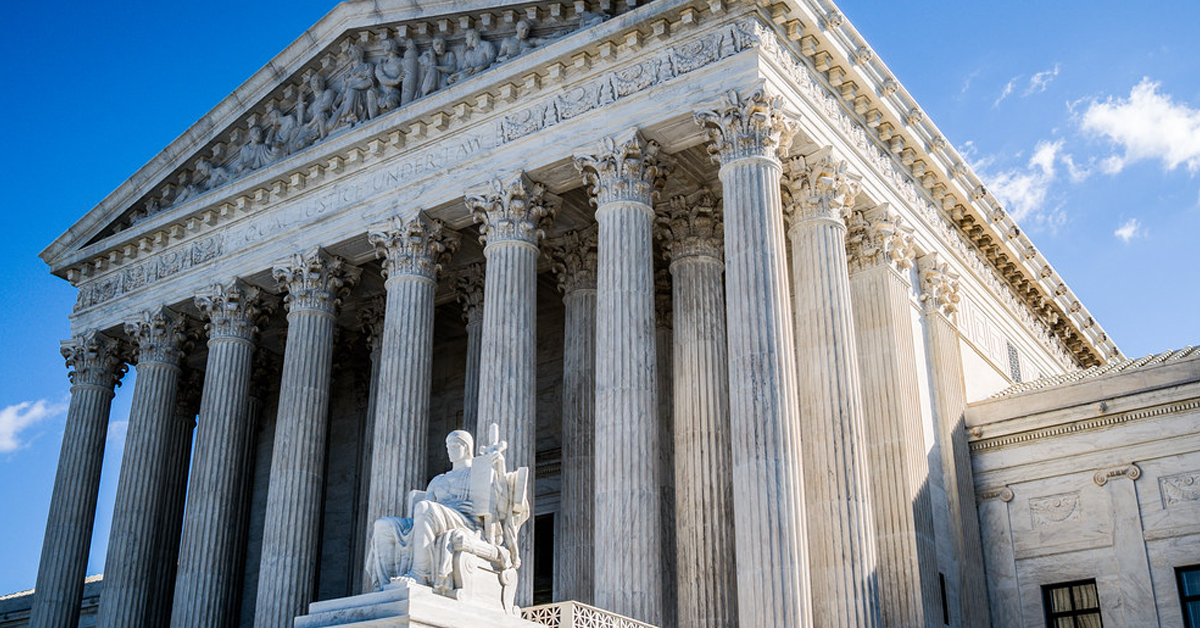


The U.S. Supreme Court ruled 6-3 that President Donald Trump exceeded his authority in imposing sweeping tariffs on imports from nearly every U.S. trading partner.
The decision is a major setback for Trump’s second-term agenda and has significant economic and policy implications, including the potential unwinding of trade deals and refunds to importers.
The big picture: Chief Justice John Roberts, writing for the majority, stated that the emergency statute Trump invoked does not grant the president the power to unilaterally set tariffs, as it lacks clear congressional authorization.
- The tariffs, enacted under the International Emergency Economic Powers Act of 1977, were intended to reduce trade deficits and pressure other nations in negotiations, but impacted over 100 countries.
Driving the news: A coalition of states and small businesses challenged the tariffs, arguing they infringed on Congress’s constitutional authority to impose taxes and harmed their operations and consumers.
- The administration warned that losing the case could cause economic turmoil and disrupt trade relationships, while Trump’s team began exploring alternatives to preserve tariff powers through other, more limited statutes.
- Trump initially targeted China, Canada, and Mexico with tariffs and later expanded duties to nearly all trading partners, citing issues from trade deficits to fentanyl imports.
Zoom in: The court’s decision followed similar conclusions by multiple lower courts, with appellate judges emphasizing that congressional intent for tariff authority must be explicit.
- Conservative justices questioned whether Congress ever intended to grant broad taxing powers to the president through the emergency statute, which does not mention tariffs, taxes, or duties.


