





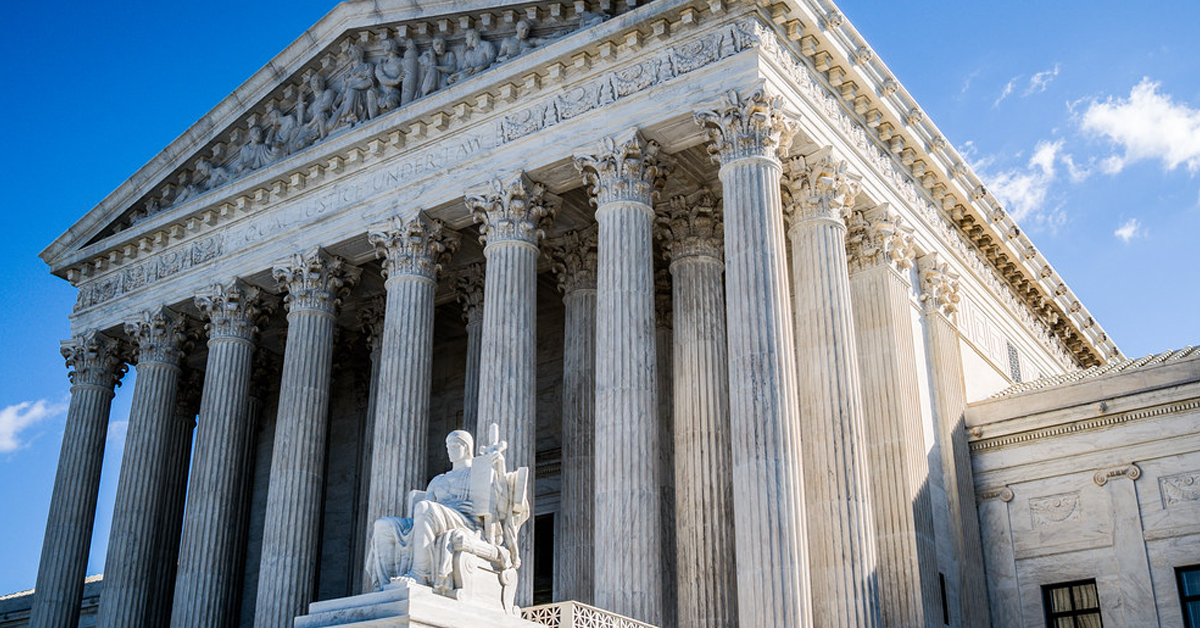
The U.S. Supreme Court heard arguments regarding the legality of tariffs imposed by President Donald Trump using the International Emergency Economic Powers Act (IEEPA) of 1977.
This case represents a significant legal test of the extent of presidential power, particularly Trump’s ability to unilaterally impose tariffs under emergency powers.
Driving the news: Trump invoked IEEPA, a law intended for national emergencies, to implement sweeping tariffs on imports from almost all U.S. trading partners.
- These tariffs have significant economic implications, potentially amounting to trillions of dollars over the next decade in costs borne by the United States.
- Trump and his supporters argue that the tariffs helped negotiate trade deals and protect national security by countering aggressive trade retaliation by other countries.
- The tariffs were challenged in court by various businesses affected by the policies and by 12 U.S. states, mostly led by Democratic officials.
- Lower courts ruled that Trump exceeded his authority by using IEEPA for this purpose, stating that the imposition of tariffs was beyond what Congress authorized under the statute.
The big picture: The Supreme Court’s conservative majority faces pressure from Trump to uphold the tariffs, which he leverages as an important economic and foreign policy tool.
- Justice Amy Coney Barrett questioned the legal basis for interpreting IEEPA’s emergency authority as including the power to impose tariffs, noting the phrase “regulate importation” had not previously been linked to tariff imposition.
- Justice Elena Kagan expressed skepticism about the argument that the president has inherent constitutional authority to impose tariffs, noting that taxation and trade regulation are traditionally congressional powers.
- The Trump administration defended its position by arguing that Trump’s actions did not violate the Supreme Court’s “major questions” doctrine, which calls for clear congressional authorization for executive actions with significant political or economic impact.
- Liberal Justice Sonia Sotomayor noted Congress did not explicitly grant tariff-imposing powers in the IEEPA statute, questioning whether such major powers could be derived implicitly.
- Justice Ketanji Brown Jackson emphasized that IEEPA was designed to limit, not expand, presidential authority during emergencies.
Go deeper: Approximately $89 billion in tariff collections were estimated during a recent seven-month period, showing the substantial financial impact of these measures.
- Trump warned that striking down the tariffs would leave the nation defenseless economically and politically.
- Should the Supreme Court rule against Trump, the administration indicated it might rely on other legal authorities to maintain tariffs not challenged in this case.


