





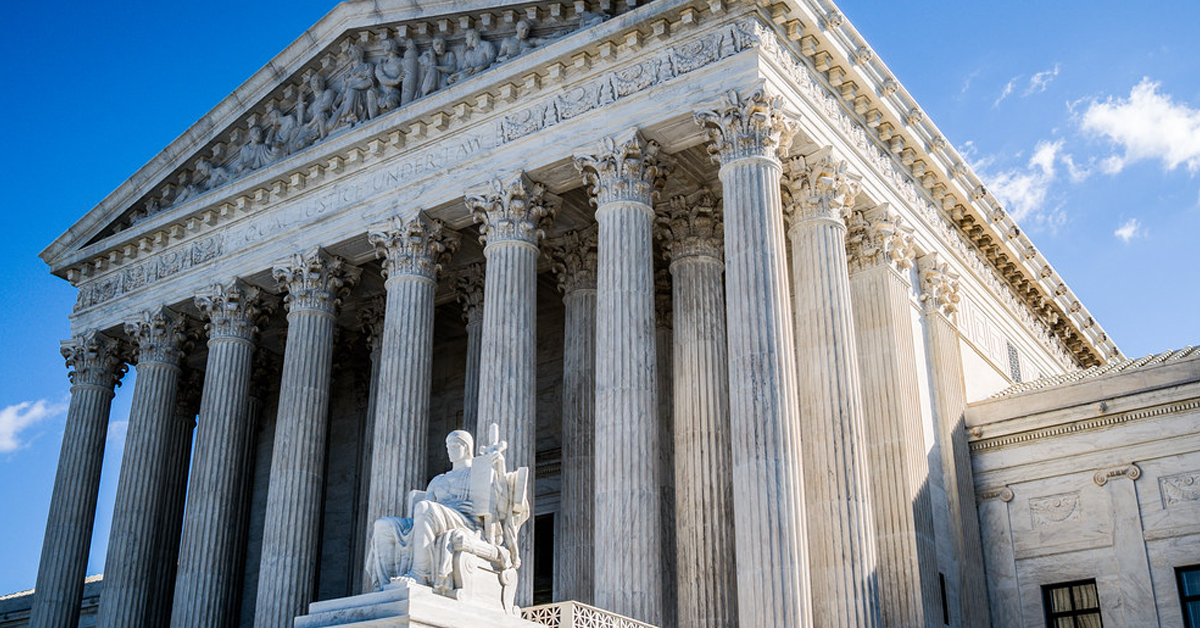
The Supreme Court has agreed to hear a case regarding the legality of President Trump’s executive order aiming to deny birthright citizenship to children born in the U.S. if neither parent is an American citizen or legal permanent resident.
Lower courts blocked the order, finding it violated the 14th Amendment’s Citizenship Clause and federal law protecting birthright citizenship.
Driving the news: The Trump administration contends that birthright citizenship should only apply to children whose parents have “primary allegiance” to the U.S., meaning citizens and permanent residents, and not to those present temporarily or without legal status.
- The administration argues that broad birthright citizenship encourages illegal immigration and “birth tourism,” where foreign nationals give birth in the U.S. to obtain citizenship for their children.
- Legal challenges were brought by several states and a nationwide class of affected individuals, with the 9th Circuit and a New Hampshire federal judge both opposing Trump’s directive.
Go deeper: Challengers cite the 1898 Supreme Court case United States v. Wong Kim Ark, which affirmed birthright citizenship for children born in the U.S. to non-citizen parents, as well as federal laws codifying this right.
- The Supreme Court previously issued a 6-3 ruling curtailing federal judges’ power to make national injunctions against presidential policies but did not decide on the order’s constitutionality.


