





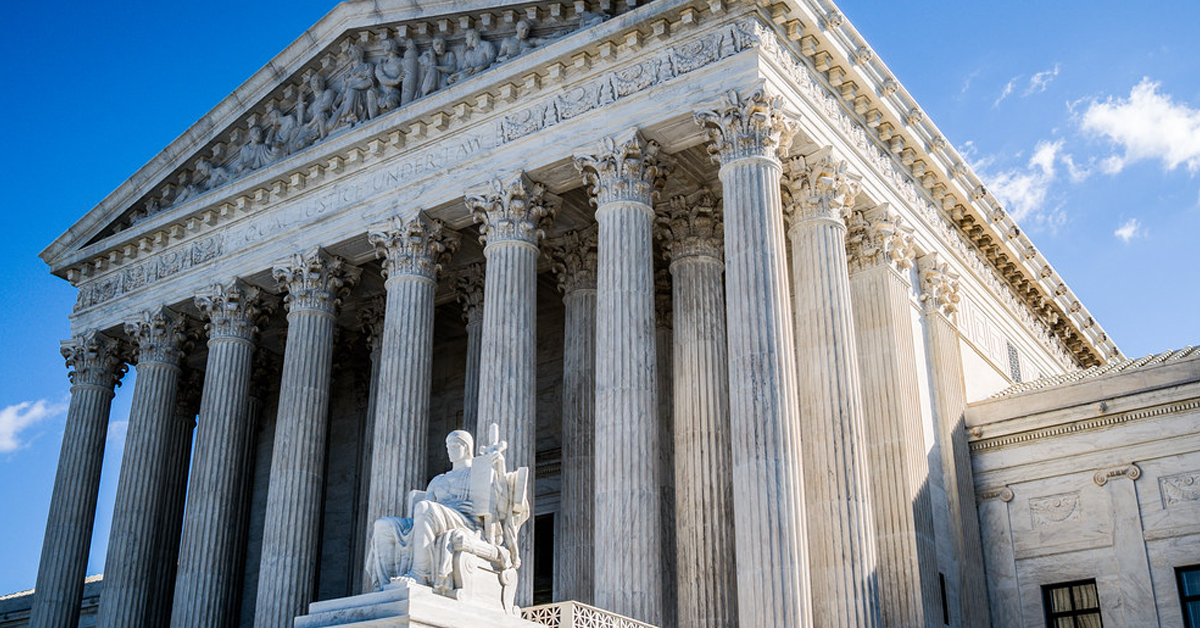
The U.S. Supreme Court heard arguments regarding Louisiana’s congressional district maps, focusing on a case that could undermine a critical part of the 1965 Voting Rights Act (VRA).
The central legal issue concerns whether Louisiana’s redistricting, which added a second Black-majority congressional district, was overly race-conscious and violated the constitutional equal protection clause.
Driving the news: Louisiana’s population is about one-third Black, and Black voters largely support Democratic candidates; the state has six U.S. House districts.
- The case pits Black voters’ interests, as represented by the NAACP Legal Defense Fund, against challenges claiming that the district map unfairly diminishes non-Black voter influence.
- Section 2 of the Voting Rights Act prohibits voting maps that dilute minority voting power even without explicit racist intent; it has become a crucial tool after the Supreme Court’s 2013 decision weakened other VRA protections.
Zoom in: Janai Nelson, arguing for Black voters, stated that the original map by the Republican legislature diluted Black voting power in favor of securing white electoral control.
- Nelson emphasized that creating a second Black-majority district to restore equal voting opportunity aligns with longstanding Supreme Court precedents.
- Conservative justices, including Clarence Thomas and Brett Kavanaugh, questioned Nelson on the limits and duration of race-based remedies, with Kavanaugh noting such measures should not be indefinite.
Go deeper: Republicans hold a slim U.S. House majority, and invalidating Section 2 could allow reconfiguration of up to 19 congressional districts, potentially impacting minority representation.
- Redistricting is conducted every decade post-census to reflect population changes, often by state legislatures; Louisiana’s Republican-led legislature initially created only one Black-majority district after the 2020 census.
Flashback: A lawsuit by Black voters led a federal judge to find the map likely violated Section 2 by harming Black voters, prompting a revised map adding a second Black-majority district.
- This updated map faced a separate lawsuit from 12 Louisiana voters (self-identified as non-African American), arguing that it unlawfully reduced non-Black voter influence and overly emphasized race.
- A three-judge panel ruled 2-1 that the redrawn map was racially motivated beyond constitutional limits, leading to the Supreme Court appeal.
- The Supreme Court previously heard the case in March but deferred ruling, ordering another argument session which took place recently.
- Louisiana initially sided with Black voters but switched to urging the Court to reject race-based districting altogether.